
What Will This Beginner Exercise Routine Schedule Help You Learn?
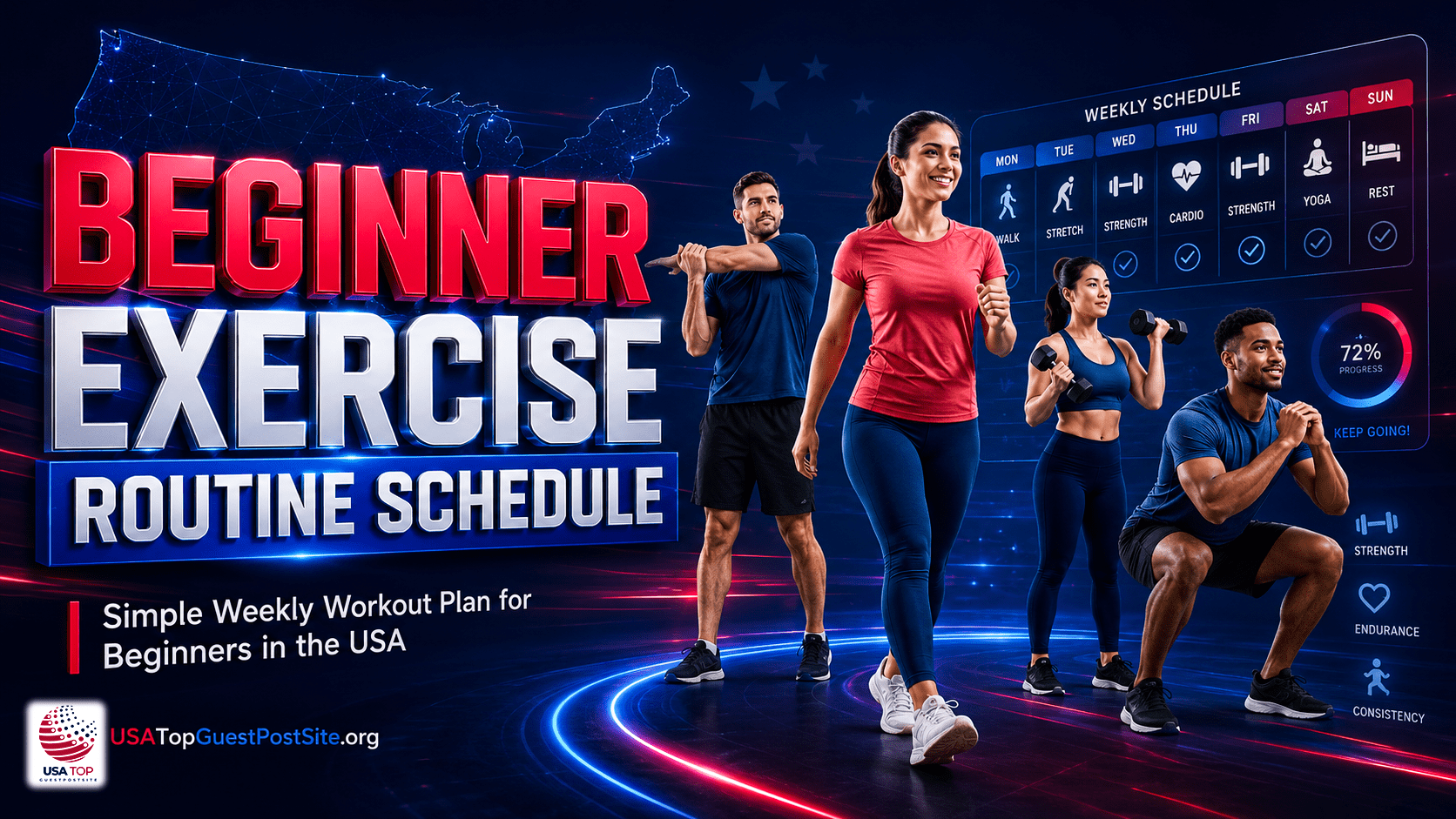
This beginner exercise routine schedule helps you start safely, stay consistent, and build a simple weekly fitness habit.
Starting exercise can feel confusing at first. You may not know what to do. You may also worry about injury, time, or motivation.
This guide makes everything simple. You will learn how to build a beginner workout schedule for home or the gym. You will also learn how to mix cardio, strength, stretching, and rest.
If you live in the USA and want an easy plan, this guide is for you. You can use it for weight loss, better energy, strength, or general health.
A good exercise routine for beginners does not need fancy equipment. You only need a clear plan and steady action.
What Is the Best Beginner Exercise Routine Schedule?
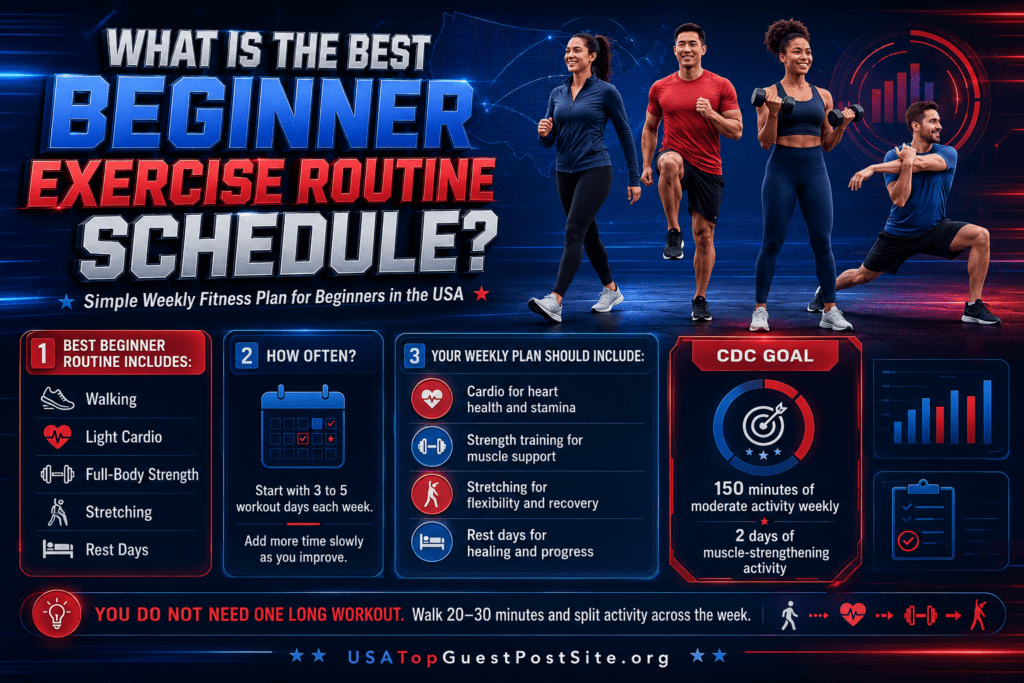
The best beginner exercise routine schedule includes walking, light cardio, full-body strength training, stretching, and rest days.
A good beginner fitness routine should feel simple. It should not feel extreme. You should finish your workout feeling challenged, not destroyed.
For most beginners, a simple exercise schedule works best. You can start with 3 to 5 workout days each week. Then you can add more time later.
Your weekly plan should include:
- Cardio for heart health and stamina.
- Strength training for muscle and body support.
- Stretching for flexibility and recovery.
- Rest days for healing and progress.
CDC guidance says adults need at least 150 minutes of moderate activity each week. Adults also need 2 days of muscle-strengthening activity weekly. You can break this time into smaller sessions.
That means you do not need one long workout. You can walk 20 or 30 minutes. You can also split your routine across the week.
How Should Beginners Start an Exercise Routine Safely?
Beginners should start slow, warm up, use proper form, and avoid doing too much too soon.
Your first goal should be safety. Your second goal should be consistency. Fast results sound exciting, but steady progress works better.
Start with low-impact moves. Walking, stretching, wall push-ups, and bodyweight squats work well. These exercises help you build confidence.
Before each workout, warm up for 5 minutes. Walk in place. Move your arms. Do light body movements.
After your workout, cool down. Stretch your legs, back, shoulders, and hips. This helps your body recover.
You should speak with a healthcare professional first if you have pain, heart issues, joint problems, or a medical condition.
An easy workout routine for beginners should match your current body. It should not copy advanced fitness plans online.
How Many Days a Week Should Beginners Exercise?
Most beginners should exercise 3 to 5 days weekly, with rest or light movement days.
You do not need hard workouts every day. Your body needs time to adjust. Rest helps your muscles repair and grow.
A beginner workout schedule can start with three days. Then you can move to four or five days.
Here is a simple rule:
- Start with 3 days if you feel inactive.
- Start with 4 days if you walk often.
- Start with 5 days if you feel ready.
The U.S. Physical Activity Guidelines recommend 150 to 300 minutes of moderate activity weekly. They also recommend muscle-strengthening activities on 2 days weekly.
You can build toward that goal slowly. Even 10 minutes counts when you start.
7-Day Beginner Workout Schedule for Home and Gym
A 7-day beginner workout schedule should mix strength, cardio, stretching, and rest.
This weekly workout plan for beginners works for busy Americans. You can follow it at home or at the gym.
| Day | Beginner Workout Plan |
| Day 1 | Full body workout for beginners |
| Day 2 | Walking or light cardio |
| Day 3 | Rest or stretching |
| Day 4 | Beginner strength training routine |
| Day 5 | Beginner cardio workout plan |
| Day 6 | Home workout routine for beginners |
| Day 7 | Rest, mobility, or light walk |
This plan gives your body balance. You train muscles. You improve stamina. You also get recovery time.
If you use a gym, keep it simple. Use light dumbbells, machines, and treadmill walking. If you stay home, use bodyweight moves.
A workout schedule for beginners at home can work well. You only need space, shoes, and a clear plan.
Beginner Exercise Routine Schedule for Weight Loss
Beginners can lose weight with exercise, healthy food, and steady habits.
A beginner exercise plan for weight loss should not feel punishing. It should help you move more and stay consistent.
Walking helps many beginners start. You can add strength training two days each week. This helps build muscle and support fat loss.
A simple weight-loss plan may include:
- 3 days of walking or light cardio.
- 2 days of full-body strength training.
- 1 or 2 rest or stretching days.
Do not depend only on workouts. Food, sleep, water, and stress also matter.
For example, you may walk 25 minutes after dinner. Then you may do squats and wall push-ups twice weekly. This small plan can build momentum.
Easy Full-Body Workout Plan for Beginners
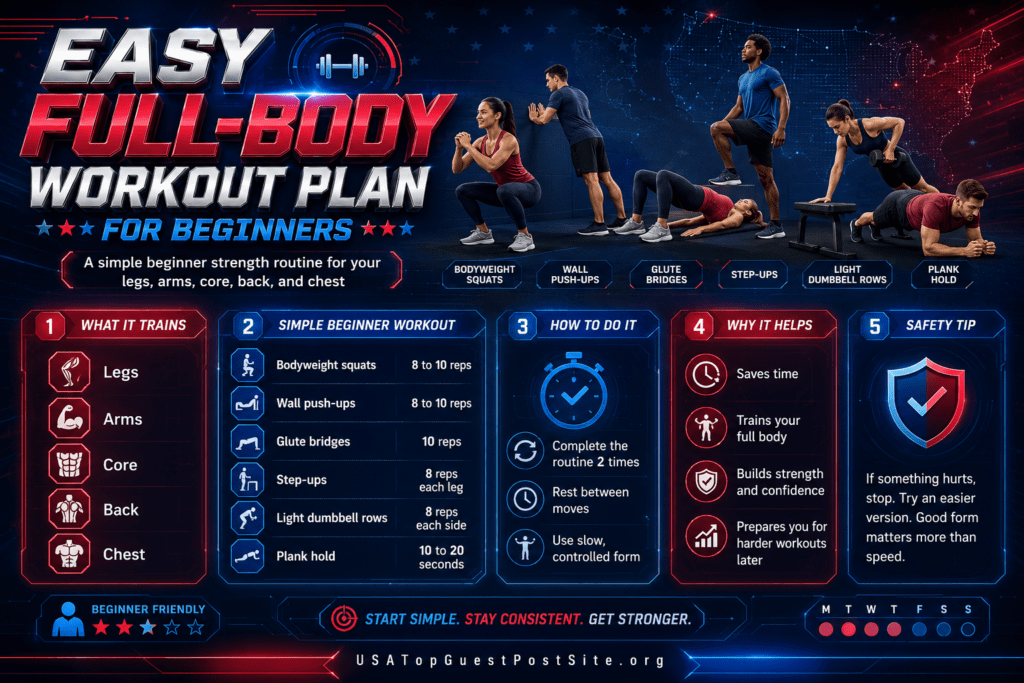
A full-body beginner workout trains your legs, arms, core, back, and chest.
A full-body workout for beginners saves time. You do not need separate days for every muscle.
Try this simple beginner workout:
- Bodyweight squats: 8 to 10 reps
- Wall push-ups: 8 to 10 reps
- Glute bridges: 10 reps
- Step-ups: 8 reps each leg
- Light dumbbell rows: 8 reps each side
- Plank hold: 10 to 20 seconds
Do this routine 2 times. Rest between moves. Use a slow and controlled form.
This beginner strength training routine helps your body move better. It also builds confidence for harder workouts later.
If something hurts, stop. Try an easier version. Good form matters more than speed.
Beginner Cardio and Strength Training Schedule
Beginners should do both cardio and strength training for better fitness.
Cardio helps your heart, lungs, and endurance. Strength training helps your muscles, joints, and posture.
For general fitness, start with light cardio. Then do strength training. For example, walk 5 minutes first. Then do bodyweight exercises.
For weight loss, combine both. Cardio burns calories. Strength training helps your body stay strong.
A beginner cardio workout plan can include:
- Brisk walking
- Cycling
- Elliptical
- Swimming
- Low-impact dance workouts
A beginner strength training routine can include:
- Squats
- Push-ups
- Rows
- Bridges
- Lunges
- Planks
You do not need to choose one. A smart beginner fitness routine uses both.
30 Day Beginner Workout Plan
A 30-day beginner workout plan should build slowly each week.
A 30-day beginner workout plan gives you structure. It also helps you track progress.
Week 1 should feel easy. Focus on showing up. Walk, stretch, and learn basic moves.
Week 2 can add more time. Add 5 minutes to your walks. Add one extra strength set.
Week 3 can build strength. Use light dumbbells or resistance bands. Keep your form clean.
Week 4 can improve consistency. Repeat your best routine. Notice your energy and mood.
Here is a simple 30-day structure:
Week 1: 3 short workouts
Week 2: 4 light workouts
Week 3: 4 workouts with strength
Week 4: 5 workouts with recovery
Your goal is not perfection. Your goal is progress.
Home Workout Routine for Beginners
Yes, beginners can exercise at home without equipment.
A home workout routine for beginners works well for busy people. It also helps if you feel nervous at the gym.
You can start in your living room. You can use a mat, chair, or wall. You do not need machines.
Try this workout schedule for beginners at home:
- 5 minutes warm-up walk
- 10 squats
- 10 wall push-ups
- 10 glute bridges
- 10 step-ups
- 15 seconds plank
- 5 minutes of stretching
Repeat once or twice. Keep it simple. Add more later.
This easy workout routine for beginners saves money. It also removes travel time.
Beginner Gym Workout Schedule
A beginner gym workout schedule should use simple machines, light weights, and walking.
The gym can feel scary at first. That is normal. You do not need to know everything.
Start with machines. They guide your movement. They also help you learn basic strength training.
A simple beginner gym workout schedule may include:
- 10 minutes treadmill walk
- Leg press machine
- Chest press machine
- Seated row machine
- Light dumbbell curls
- Plank or core machine
- 5 minutes cooldown walk
Use lightweight first. You should control every rep. Never rush.
Ask gym staff for help if needed. Most gyms in the USA offer basic equipment help.
Your goal is confidence. Heavy lifting can come later.
Common Mistakes to Avoid in a Beginner Workout Routine
Beginners should avoid overtraining, poor form, skipped warm-ups, and unrealistic goals.
Many beginners start too hard. Then they get sore, tired, or frustrated. This can stop progress fast.
Avoid these common mistakes:
Skipping warm-ups: Your body needs preparation. Warm muscles move better.
Doing advanced workouts: Start with beginner moves. Build skill first.
Training every day: Rest days help progress. Your body needs recovery.
Lifting too heavy: Light weights teach proper form. Heavyweights can wait.
Expecting fast results: Fitness takes time. Small wins matter.
A simple exercise schedule for beginners works best. You should enjoy the plan enough to repeat it.
How to Stay Consistent With Your Beginner Exercise Schedule
You stay consistent by making exercise easy, short, and realistic.
Consistency beats intensity. You do not need the perfect plan. You need a plan you can repeat.
Start with 20 minutes. Pick a time that fits your life. Many busy Americans work out before work, after dinner, or during lunch.
Set small goals. For example, walk three days this week. Then add one strength day next week.
Track your workouts. Use a notebook, phone app, or calendar. Seeing progress can motivate you.
Here is a helpful personal example. If you miss Monday, do not quit. Move that workout to Tuesday. Your week can still succeed.
A daily exercise routine for beginners should feel flexible. Life gets busy. Your plan should adjust.
What Is a Good Exercise Schedule for Beginners?
A good beginner schedule includes 3 strength/cardio days, 2 light movement days, and 2 rest days.
Here is a simple example:
Monday: Full-body strength
Tuesday: 20-minute walk
Wednesday: Rest or stretching
Thursday: Strength and light cardio
Friday: 25-minute walk
Saturday: Home workout routine
Sunday: Rest or mobility
This beginner exercise routine schedule covers all the basics. It includes movement, strength, and recovery.
You can follow it at home. You can also use it at the gym.
If you feel tired, reduce the time. If you feel strong, add 5 minutes.
Is a Beginner Exercise Routine Schedule Worth Following?
Yes, a structured routine helps you stay focused, safe, and consistent.
A beginner exercise routine schedule removes guesswork. You know what to do each day. This makes exercise feel easier.
It also helps you avoid random workouts. Random workouts can confuse beginners. A plan gives you direction.
For USA readers, this matters a lot. Many people work long hours. Many also need affordable fitness options.
A simple routine can support weight loss, strength, energy, and better confidence. It can also help you build long-term health habits.
At USATopGuestPostSite, we share helpful lifestyle and wellness guides for USA readers. You can explore more simple, informative content at usatopguestpostsite.org
Bottom Line: What Should Beginners Do First?
Start with walking, basic strength moves, stretching, and weekly consistency.
Do not wait for the perfect moment. Start small today. A 10-minute walk can be your first win.
Your beginner workout schedule should match your lifestyle. It should also support your goal.
If you want weight loss, add walking and strength training. If you want energy, move daily. If you want confidence, follow a weekly plan.
The best exercise routine for beginners is simple. It is safe. It is repeatable.
Start where you are. Build slowly. Keep going.
Top 5 Short FAQs About Beginner Exercise Routine Schedule
What is the best beginner exercise routine schedule?
A good schedule includes 3 to 5 workout days weekly.
It should include cardio, strength training, stretching, and rest days.
How long should a beginner exercise each day?
Most beginners can start with 20 to 30 minutes daily.
You can start with 10 minutes if needed.
Can I do a beginner workout routine at home?
Yes, you can exercise at home without equipment.
Use walking, squats, wall push-ups, bridges, and stretching.
Is a 30-day beginner workout plan good for weight loss?
Yes, it can support weight loss.
You also need healthy food, sleep, and consistency.
Should beginners do cardio or strength training?
Beginners should do both.
Cardio builds stamina. Strength training builds muscle and support.