
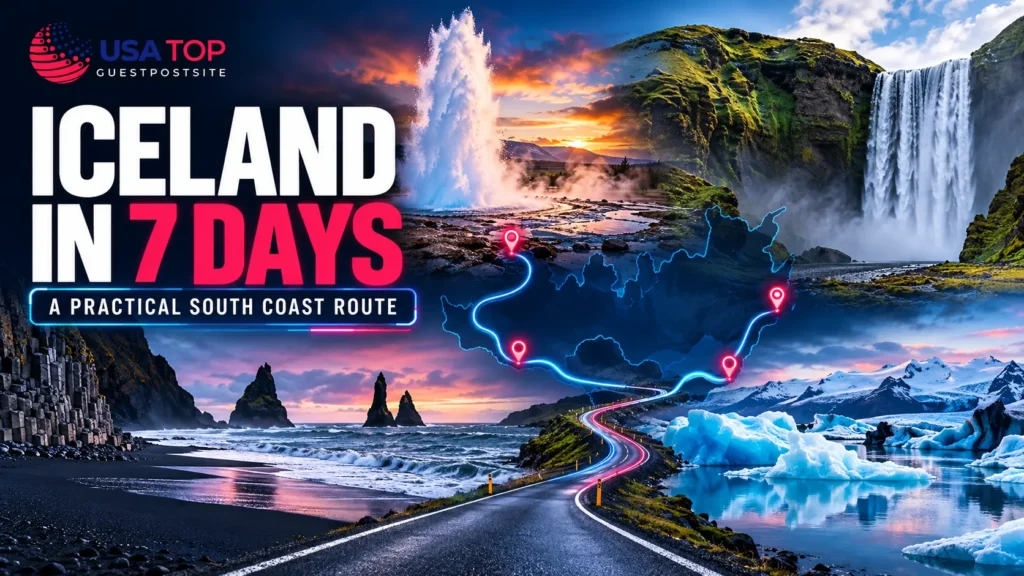
 Spend Iceland travel itinerary 7 days exploring Reykjavík, the Golden Circle, and Iceland’s South Coast. Continue to Jökulsárlón Glacier Lagoon, then return west. This route gives you time for major sights and changing weather. Check roads before every drive.
Iceland looks small on a map. Its best stops still take time. You may pull over for a waterfall, wait out strong wind, or spend an hour longer at a glacier lagoon.
That is why this Iceland travel itinerary for seven days follows one region carefully. It starts near Keflavík International Airport. It travels through the Golden Circle and South Coast. Then it returns toward Reykjavík.
You will see waterfalls, black sand, geothermal landscapes, and floating ice. You will also have a practical place to sleep each night.
This route suits first-time visitors with a rental car. You can adapt it to guided day trips if you prefer. In winter, shorten the driving when conditions demand it.
Is Seven Days Enough for Iceland?
Yes, seven days can cover Reykjavík and the South Coast well. It cannot cover every region at a relaxed pace.
Iceland’s Ring Road runs around much of the country. Visit Iceland describes it as a route of about 1,322 kilometers. Completing that loop in one week means substantial daily driving. Weather can make the schedule harder.
This guide takes a different approach. You travel east along the southern coast. You stop near Jökulsárlón. Then you retrace the route west.
Returning on the same road has a benefit. You can revisit a place under better light. You can also skip a stop during bad weather and try again later.
If you want the full Ring Road, give yourself more time. Visit Iceland publishes a 14-day circuit as one broader example.
Your Seven-Day Iceland Route at a Glance
| Day | Main area | Overnight base |
| 1 | Keflavík arrival and Reykjavík | Reykjavík |
| 2 | Golden Circle | Selfoss or nearby |
| 3 | Waterfalls and Vík | Vík |
| 4 | Skaftafell and Jökulsárlón | Southeast Iceland |
| 5 | Return along the South Coast | Vík or nearby |
| 6 | Reykjavík and optional Reykjanes stops | Reykjavík or Keflavík |
| 7 | Departure | — |
The overnight towns are suggestions. Book around your flight time and available lodging.

Day 1: Arrive and Explore Reykjavík
Keep your arrival day light. Collect your car, settle in, and explore Reykjavík.
Most international visitors arrive at Keflavík International Airport. Before leaving, check your rental car for existing damage. Photograph anything you find. Confirm fuel rules and emergency contact details.
Then head toward Reykjavík. If you arrive after an overnight flight, avoid scheduling a long drive. Fatigue and unfamiliar roads make a poor combination.
Choose one or two city activities. Walk around the harbor. Browse local shops. Try an Icelandic meal. If the weather turns unpleasant, choose an indoor museum or café.
You could also visit a geothermal pool. Confirm hours and booking rules for the specific facility.
Where to stay: Reykjavík gives you many lodging and dining choices. A room with breakfast can simplify your first morning.
Practical tip: Buy basic groceries and snacks tonight. Smaller towns may offer fewer shopping options.
Day 2: Drive the Golden Circle
Visit Þingvellir, the Geysir area, and Gullfoss. These are the Golden Circle’s main stops.
The route makes a strong first road-trip day. It introduces Iceland’s geology without sending you far east immediately.
Start at Þingvellir National Park. Follow marked paths and allow time to appreciate the landscape. Continue to the Geysir geothermal area. Stay on designated walkways around hot water.
Finish at Gullfoss waterfall. Conditions near the falls can feel windy and wet. Wear a waterproof outer layer.
Visit Iceland identifies these three places as the Golden Circle’s defining attractions. visiticeland.com
Do not fill every spare hour. You may want extra time at one stop. Weather could also slow your drive.
Where to stay: Selfoss or another South Iceland base works well. It positions you for the next day.
Alternative: If you do not want to change hotels yet, return to Reykjavík. Expect additional driving on Day 3.
Day 3: Follow the Waterfalls to Vík
Drive east toward Vík and choose a few South Coast stops. Avoid treating every viewpoint as mandatory.
Your first major stop can be Seljalandsfoss. Then continue to Skógafoss. Both sit along the South Coast travel corridor.
Visit Iceland highlights these waterfalls among the region’s defining sights. visiticeland.com
Wear shoes with good grip. Paths can become slippery. Conditions around waterfalls also change with the season.
Near Vík, you may want to see Reynisfjara’s black sand coastline. Follow the current safety signs and closures. Stay well back from the water.
This warning deserves attention. Iceland’s SafeTravel service identifies dangerous sneaker waves and falling-rock hazards. It currently directs visitors to respect viewpoint access and closures. Check the latest notice on the day you visit. Safetravel
Do not turn your back on the sea for a photo. Keep children close. No image is worth crossing a barrier.
Where to stay: Vík makes a practical overnight base.
Practical tip: Fuel your car before leaving a town. Keep snacks and water available.
Day 4: Visit Skaftafell and Jökulsárlón
Make this your long southeastern sightseeing day. Start early, but let road conditions control your plans.
Drive toward the Skaftafell area. Choose a walk suited to your group and the day’s conditions. Follow marked trails. Avoid stepping onto a glacier without a qualified guide and suitable equipment.
Continue to Jökulsárlón Glacier Lagoon. Watch ice move across the water. Nearby Diamond Beach may hold ice washed onto dark sand.
The ice changes constantly. You might see many pieces or very few. Keep a safe distance from the water and floating ice.
Visit Iceland places Jökulsárlón and Diamond Beach among the South Coast’s major attractions. visiticeland.com
This day can feel rushed if you add several long hikes. Choose one main walk, then give the lagoon enough time.
Where to stay: Book near the lagoon, Skaftafell, or another southeast stop. Choose according to availability and driving comfort.
Winter adjustment: Short daylight and difficult roads may make this day unsuitable. Stay closer to Vík when conditions require it.
Day 5: Return West at a Slower Pace
Drive back toward Vík and revisit missed sights. This is your built-in flexibility day.
You may have skipped a waterfall during rain. You may have reached the lagoon late. Use today to address one missed priority.
Consider another short walk, a guided activity, or an unhurried meal. Verify tour conditions directly with its operator. Outdoor activities can change or cancel with weather.
A return drive also lets you notice different views. Do not stop where parking is unsafe. Use designated pullouts.
Try to arrive at your accommodation before you become tired. A long day of short stops can still demand plenty of attention.
Where to stay: Vík or another town farther west.
Practical tip: Review the next day’s weather before deciding how far west to travel tonight.
Day 6: Return to Reykjavík, With an Optional Reykjanes Stop
Use Day 6 to move near the airport. Add activities only when travel conditions allow.
You can spend most of the day in Reykjavík. Visit a museum, walk a neighborhood, and enjoy a relaxed dinner.
You could instead explore an accessible part of the Reykjanes Peninsula. Check current official alerts first. Volcanic activity and access restrictions can change plans.
Do not assume a specific geothermal attraction will remain open. Confirm the operator’s status and cancellation rules before paying.
SafeTravel publishes Iceland travel alerts, including information affecting the Reykjanes area. Check those updates alongside road conditions. Be safe in Iceland
If you have an early flight, stay closer to Keflavík. Return the rental car according to your agreement.
Where to stay: Reykjavík for a later departure; Keflavík for an early one.
Day 7: Depart Without a Rushed Morning
Leave enough time for fuel, the car return, and airport procedures. Your flight time should shape this day.
Check your airline’s instructions. Give yourself a buffer for driving conditions. Inspect the rental car before returning it.
If your flight leaves later, enjoy a final breakfast. Keep the rest of the morning flexible.
Do not schedule a distant attraction before departure. A weather change or delayed drive could threaten your flight.
When Is the Best Time for This Iceland Itinerary?
Summer offers longer daylight; winter demands more flexibility. Both can deliver a memorable trip.
In summer, you have more hours for stops and walks. Popular lodging and activities can book early.
Spring and fall can bring changing conditions. Prepare for wind, rain, and cold. Do not assume a clear morning guarantees an easy afternoon.
Winter brings shorter days and potential ice. Reduce daily driving. Consider guided tours if you lack winter-driving experience.
SafeTravel warns that winter conditions can occur during spring and autumn too. It advises drivers to check conditions and adapt their speed. Safetravel
If seeing the northern lights matters most, check the Icelandic Meteorological Office’s aurora and cloud forecast. An itinerary cannot guarantee a sighting. Icelandic Meteorological office
Should You Rent a Car or Book Tours?
Rent a car for flexible stops when you can drive confidently. Choose tours when you prefer someone else to handle the roads.
A rental car helps you set your own pace. It also gives you control over meal and photo stops. You must handle navigation, parking, weather decisions, and the rental contract.
Guided trips remove much of the driving work. They follow fixed pickup times and routes. Compare what each tour actually includes.
You can also combine both approaches. Stay in Reykjavík and book a Golden Circle day trip. Rent a car only for the South Coast if that suits your plans.
Before choosing a vehicle, read the rental company’s road restrictions. Do not assume a vehicle allows highland travel. This itinerary stays on ordinary tourist routes and does not require F-roads.
Review insurance terms carefully. Ask about gravel, wind, sand, water, and roadside assistance coverage. Do not assume every risk falls under a basic policy.
For general trip planning, the site’s hotel booking guide can help you compare room amenities and total costs. Verify every hotel’s current terms directly.
How Do You Drive Safely in Iceland?
Check the forecast and road status every morning. Check again during longer driving days.
Use SafeTravel, the Icelandic Road and Coastal Administration’s road information, and the Icelandic Meteorological Office. Conditions can change quickly. safetravel.is
Do not rely only on a navigation app’s arrival time. That estimate cannot promise safe driving conditions.
Keep these habits throughout the route:
- Follow closures and warning signs.
- Slow down for wind and reduced visibility.
- Stop only where parking is permitted.
- Allow vehicles to pass when appropriate.
- Keep headlights on as local rules require.
- Do not drive into a closed road.
- Move plans when the weather demands it.
SafeTravel advises checking weather and road conditions several times daily. It also notes Iceland’s year-round headlight requirement. Safetravel
If driving feels unsafe, stop in a suitable town. One missed attraction costs less than a dangerous journey.
How Much Does a Seven-Day Iceland Trip Cost?
Your total depends on season, flights, lodging, transport, and activities. A fixed dollar estimate would mislead many U.S. travelers.
Start with these categories:
| Cost | What to compare |
| Flights | Departure airport, baggage, and change terms |
| Lodging | Seven nights, taxes, breakfast, and parking |
| Transport | Rental car, fuel, insurance, or tours |
| Food | Groceries, restaurants, and travel-day meals |
| Activities | Guided walks, pools, and other reservations |
| Reserve | Weather changes and unexpected needs |
A cheaper hotel can add driving time. A lower rental quote may exclude coverage you want. Compare complete trip costs before booking.
One practical way to control spending is mixing restaurants with groceries. Buy breakfast supplies and simple lunches. Keep a few dinners for local food.
If you want meal-planning help, see the site’s 25 easy meals for vacation. Check whether your lodging provides a usable kitchen first.
What Should You Pack for One Week in Iceland?
Pack layers and weather protection, even in summer. Your clothing should handle changing conditions.
Bring:
- A waterproof outer jacket
- Warm midlayers
- Comfortable walking shoes with grip
- Quick-drying clothing
- Hat and gloves when conditions warrant them
- Swimsuit for pools or geothermal bathing
- Reusable water bottle
- Portable charger
- Any prescription medicine you need
Choose footwear for wet paths and uneven surfaces. Fashion shoes may work in Reykjavík. They will not suit every outdoor stop.
Keep a small day bag in your car. Store spare layers, water, and snacks inside. Avoid leaving valuable items visible.
You do not need to buy specialist hiking equipment for every viewpoint. You do need appropriate gear for any longer walk you choose.
What Should U.S. Travelers Check Before Departure?
Check passport validity and current entry requirements. Do this before booking nonrefundable travel.
The U.S. Department of State’s Iceland page lists passport and entry information for U.S. citizens. It states a three-month validity requirement beyond your planned Schengen departure and recommends six months. Review the complete current guidance for your situation. Travel.State.gov
Check your airline, rental terms, and travel insurance documents too. Save digital copies of essential reservations.
If you plan a guided glacier activity, verify age, fitness, clothing, and cancellation requirements. Operators set their own conditions.
Seven-Day Iceland Itinerary FAQs
1. Can you drive Iceland’s Ring Road in seven days?
You can attempt it, but expect extensive driving. This South Coast route gives first-time visitors more time at major stops.
2. Do you need a 4×4 for this itinerary?
Not automatically. Vehicle needs depend on the season, road conditions, and rental rules. Ask the provider and review official road information.
3. Can you visit Jökulsárlón from Reykjavík in one day?
It creates a very long day. This itinerary uses an overnight stay in the southeast to reduce the pressure.
4. Is the Golden Circle the same as the Ring Road?
No. The Golden Circle links sights near Reykjavík. The Ring Road travels around much more of Iceland. visiticeland.com
5. Can you see the northern lights on this trip?
Possibly during suitable dark-season conditions. Cloud cover and aurora activity affect visibility. No tour or itinerary can guarantee them.
6. Is Reynisfjara safe for a quick photo?
Only follow current access and safety instructions. Stay away from the water. Sneaker waves can reach farther than visitors expect. Safetravel
7. What should you skip if weather interrupts the trip?
Skip optional stops before compromising a safe drive. Keep lodging and departure plans realistic. Use Day 5 as your first buffer.
8. Where should you sleep on the South Coast?
Vík and a southeast base divide this route well. Choose specific properties by availability, parking, meal options, and cancellation terms.
Final Thoughts
Seven days give you a strong introduction to South Iceland. Reykjavík, the Golden Circle, Vík, and Jökulsárlón provide a varied route.
The schedule works best when you allow it to change. Weather and roads should determine each day’s final stops. Check official conditions, respect closures, and spend time at the places you value most.
For other destination and planning ideas, explore the site’s Travel and Tourism guides.
USA To Guest Post Site
Info@usatopguestpostsite.org
New York, USA


