What Is the Mexico Tourism Tax and Why Do Travelers Need to Pay It?
The Mexico tourism tax, officially known as Visitax, is a mandatory fee that international travelers must pay when visiting certain regions of Mexico — most notably the state of Quintana Roo. If you’re heading to Cancun, Tulum, or Playa del Carmen, this fee applies to you.
Authorities collect the Visitax fee to fund tourism infrastructure improvements, environmental conservation efforts in ecologically sensitive areas, and public safety measures throughout the region. Think of it less as a bureaucratic nuisance and more as a contribution toward maintaining the destinations that make Quintana Roo one of the most visited places in the world. The system is straightforward once you understand it — the main thing is knowing it exists before you land.
Is the Mexico Tourism Tax Mandatory for Dual Citizenship Holders?
Q: Does the Mexico tourism tax apply to travelers with dual citizenship?
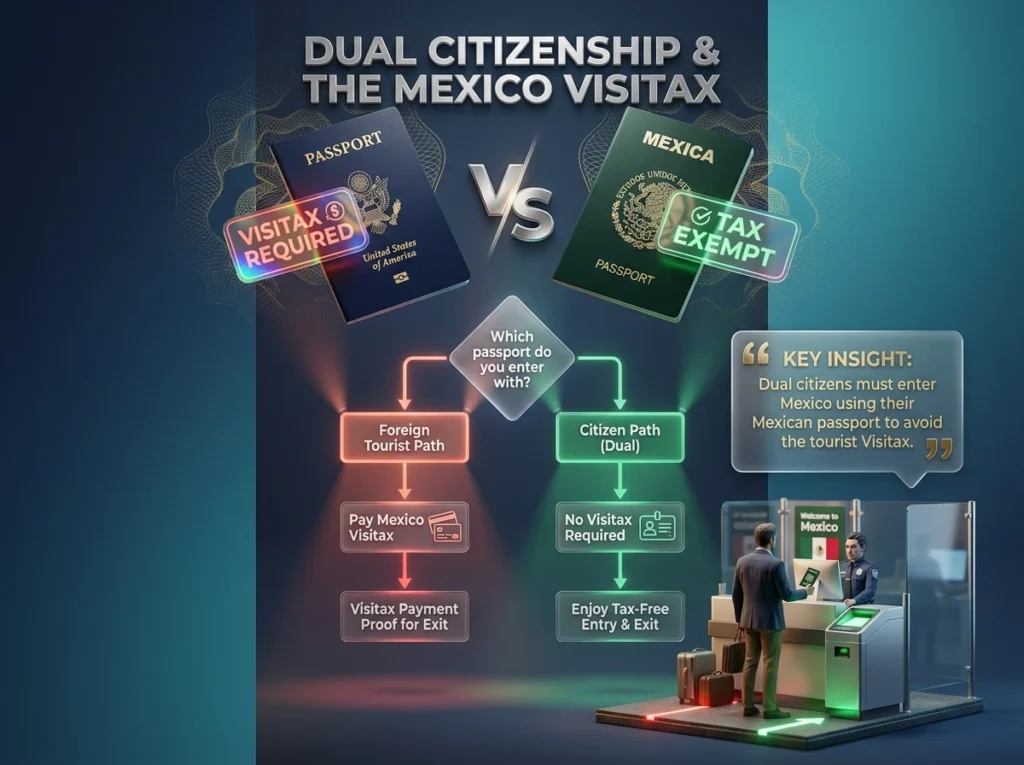
This is one of the most commonly misunderstood aspects of the Visitax, so it’s worth being very clear: whether you need to pay depends not on what passports you hold, but on which one you use to enter Mexico.
If a dual citizenship holder enters Mexico using a foreign passport — say, a US or UK passport — they are treated as an international tourist and are required to pay the Mexico tourism tax. The key variable is your entry status, not your nationality on paper.
Do Mexican citizens with dual nationality need to pay Visitax?
No. Mexican citizens, including those who hold dual nationality, are fully exempt from the Visitax when they enter using a valid Mexican passport or official Mexican identification. The tax was designed specifically for foreign tourists, and Mexican nationals entering under their Mexican identity are not classified as tourists under the fee structure.
If you hold dual citizenship and want to avoid the fee, the practical solution is simple: enter Mexico using your Mexican passport.
What documents prove exemption from the Mexico tourism tax?
To establish exemption at the point of verification, travelers need to present one of the following: a valid Mexican passport, a Mexican residency card (Tarjeta de Residente), or another official form of identification that confirms legal residency or citizenship status in Mexico. Showing these documents demonstrates you are not subject to the Visitax fee as an international visitor.
Who Needs to Pay the Mexico Tourism Tax?
The straightforward answer is: most international tourists visiting Quintana Roo who are staying for more than 24 hours. This includes travelers arriving for leisure, business, or any other purpose. The Mexican tourism tax is applied broadly, regardless of the length of your trip beyond that initial threshold.
Popular destinations where the fee is actively enforced include Cancun, Playa del Carmen, Tulum, Cozumel, and Holbox — all of which fall within Quintana Roo’s jurisdiction.
Are children required to pay the Mexico tourism tax?
This is an area where travelers should check the most current local regulations before traveling. Requirements for children have varied, and while some age exemptions exist, the Visitax has at various points applied to all international travelers regardless of age. The safest approach is to verify the current policy directly through official sources before your trip, especially if you’re traveling with young children.
How Much Is the Mexico Tourism Tax in 2026?
The Mexico tourism tax typically costs around $10 to $15 USD per person for a standard tourist visit to Quintana Roo. The exact amount in local currency can shift slightly depending on exchange rates at the time of payment, and regional authorities may issue updated fee schedules.
As of 2026, the Visitax remains active and mandatory for international visitors. Authorities have streamlined the online payment system and improved verification processes at departure points — which means enforcement is more consistent than it was in earlier years. Don’t assume this is an optional or easily overlooked fee.
How to Pay Mexico Tourism Tax Online — Step by Step
Paying the Visitax online is the recommended and most reliable method. The process is designed to be completed before you travel or during your stay, and it takes only a few minutes when you have your travel details ready.
Here is the complete step-by-step process:
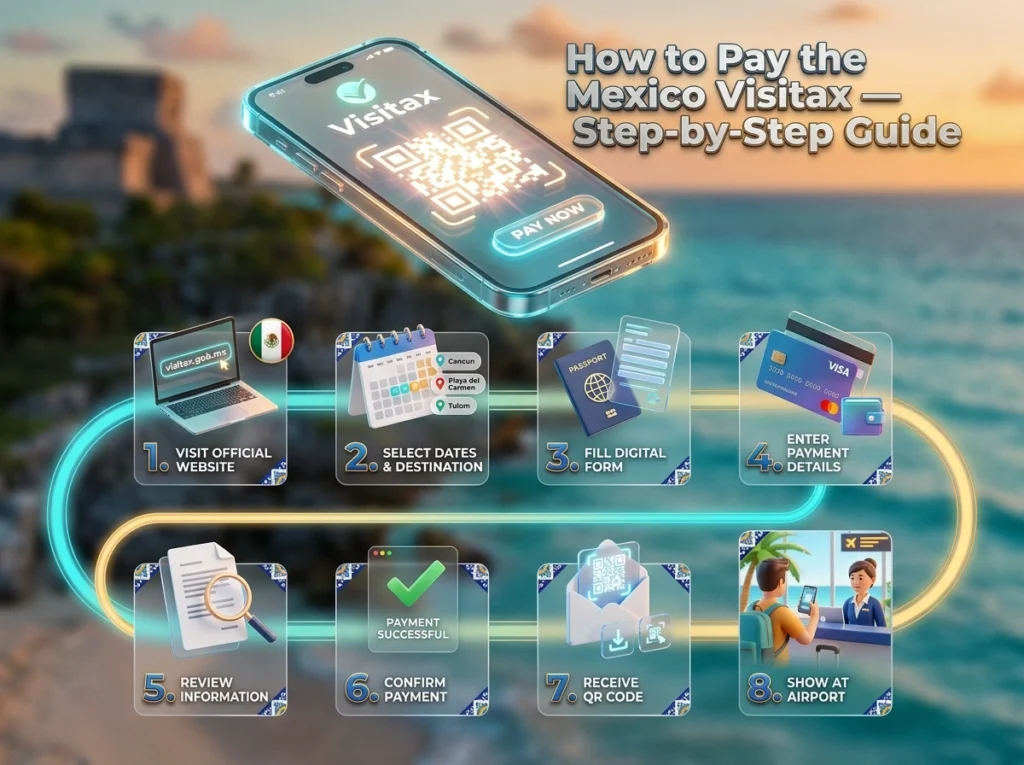
- Go to the official Visitax website — search for “Visitax Quintana Roo official” and verify the URL is a legitimate government domain before entering any personal information.
- Select your travel dates and enter your destination within Quintana Roo (Cancun, Tulum, Playa del Carmen, etc.).
- Enter the personal details for each traveler being registered, including passport information.
- Choose your payment method — the platform accepts major international credit and debit cards, and some digital payment options may also be available.
- Review all entered information carefully before confirming the transaction — errors can complicate verification later.
- Complete the payment and wait for the confirmation screen to load.
- Save your QR code or receipt — download it, screenshot it, and email it to yourself so you have both a digital and a backup copy.
- Present this receipt when requested at the airport before departure from Mexico.
What payment methods are accepted for the Mexico tourism tax?
Most major international credit cards and debit cards are accepted through the official payment platform. Visa, Mastercard, and American Express are typically supported. Some digital wallet options may also be available depending on when you’re completing the transaction. Always use the official platform — third-party sites often add service fees or, worse, are outright scams.
When should you pay the Mexico tourism tax?
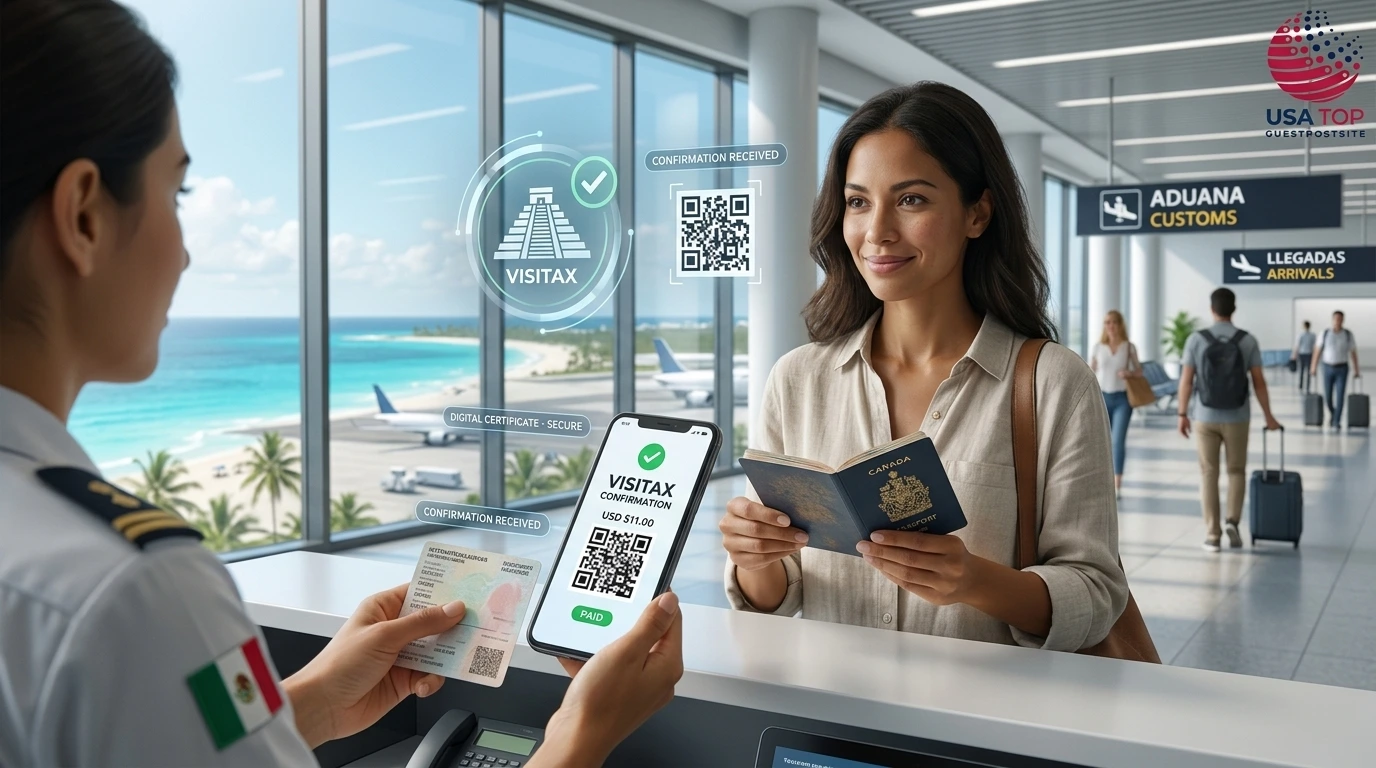
Pay the Visitax either before you arrive in Mexico or during your stay — but always before you attempt to depart. Airport verification at Cancun International Airport and other regional airports in Quintana Roo has become more systematic, and travelers without proof of payment may face delays or additional checks before boarding their flight home.
Paying in advance is simply less stressful. It takes five minutes and removes one more thing to worry about on the day you’re trying to catch a flight. Mexico medical tourism also needs to pay taxes from tourists.
What Happens If You Don’t Pay the Mexico Tourism Tax?
Q: What are the consequences of not paying the Visitax?
Skipping the Mexico tourism tax is not something to gamble on. Travelers who haven’t paid may encounter delays at the departure checkpoint, be directed to a separate queue for additional verification, or be required to pay on the spot before being cleared to board. In some cases, fines may be applied.
Enforcement has tightened noticeably since the system was first introduced. While some travelers in earlier years slipped through without paying, the verification infrastructure at Cancun airport and other departure points has improved significantly. The risk of missing a flight because of an unpaid Visitax is real, and it’s a completely avoidable problem.
Can you pay the Mexico tourism tax at the airport?
In some instances, payment facilities may be available at the airport, but this is not guaranteed across all terminals or departure points. Relying on airport payment as a backup plan is a high-risk strategy — queues can be long, card terminals can fail, and you’ll be dealing with this problem while already stressed about your departure time. Pay online in advance. It takes minutes, and the peace of mind is worth it.
Is the Mexico Tourism Tax Required in Cancun and Quintana Roo?
Yes, clearly and without ambiguity. The Visitax was introduced specifically for the state of Quintana Roo, which encompasses all of Mexico’s most popular Caribbean coast destinations. Cancun, Tulum, Playa del Carmen, Cozumel, and Holbox all fall within this jurisdiction. If you’re visiting any of these places as an international tourist, the Mexico tourism tax applies to you.
It is worth noting that the Visitax is currently a Quintana Roo-specific fee — it does not apply to the same extent in other Mexican states like Oaxaca, Jalisco, or Mexico City. Always verify requirements specific to your destination region before traveling.
How to Avoid Scams Related to Mexico Tourism Tax
The growth of Visitax awareness has, unfortunately, attracted opportunists. Unofficial websites charge inflated fees, collect payment, and either deliver a fraudulent receipt or nothing at all. Some appear in sponsored search results and look convincingly legitimate.
How can you identify the official Visitax website?
The official Visitax platform is operated by the Quintana Roo state government. Look for a domain that clearly belongs to a Mexican government entity — typically ending in .gob.mx — and avoid any site asking for unusual fees, extra “processing charges,” or excessive personal information beyond what the payment process requires.
Practical protection steps include: going directly to the official government tourism portal rather than clicking ads, checking the URL carefully before entering payment details, and using a credit card (rather than debit) for the transaction so you have a chargeback option if something goes wrong.
What Are the Latest Updates on the Mexico Tourism Tax for 2026?
As of 2026, the Mexico tourism tax remains fully active and mandatory for international tourists visiting Quintana Roo. Authorities have continued to invest in improving the online payment experience and have upgraded departure verification systems at Cancun International Airport and regional terminals.
There are no current indications that the Visitax will be abolished or significantly reduced in the near term. If anything, the broader trend across popular tourist destinations worldwide is toward increased tourism fees — so travelers heading to Mexico’s Caribbean coast should expect this cost to remain a fixture of trip planning.
What Travel Tips Should You Know About the Mexico Tourism Tax?
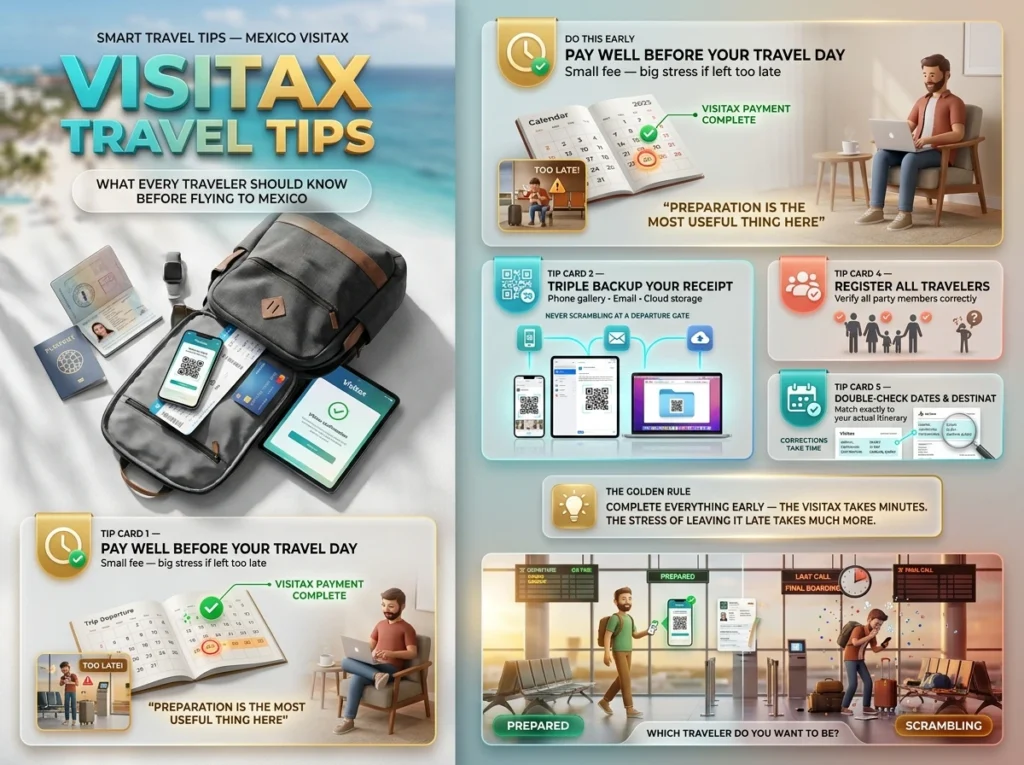
Preparation is the most useful thing here. The Visitax is a small fee in the context of an international trip, but it can cause disproportionate stress if left until the last moment. Keep a digital copy of your payment receipt or QR code in your email, your phone’s photo library, and a cloud storage location — multiple backups mean you’re never scrambling at a departure gate.
Complete the payment through the official platform, verify you’ve registered all travelers in your party correctly, and double-check that the dates and destination match your actual itinerary. If you’ve made a booking error, the official platform has a correction process, but it takes time, which is another reason to complete this well before your travel day.
Conclusion
The Mexico tourism tax — Visitax — is a straightforward mandatory fee that every international tourist visiting Quintana Roo needs to account for. At roughly $10 to $15 USD per person, it’s a minor expense relative to the cost of a trip to Cancun or Tulum. The process of paying it is quick and entirely online. The only way this fee becomes a problem is if you ignore it until the airport. Pay early, save your receipt in multiple places, and use only the official platform, and it becomes a non-issue. What matters is that you know it exists — and now you do.
FAQs
Is the Mexico tourism tax included in airline tickets?
No. The Visitax is a separate charge that airlines do not collect. It must be paid independently through the official Visitax platform and is not bundled into your airfare or hotel booking in most cases.
How long is the Mexico tourism tax valid?
The Visitax payment is linked to your specific travel dates and entry details rather than a calendar period. It covers your declared period of stay in Quintana Roo and is not a reusable pass — each trip requires a new payment.
Do transit passengers need to pay the Mexico tourism tax?
No. Travelers who remain airside during a layover — meaning they do not pass through immigration and exit the airport — are not required to pay the Mexico tourism tax. The fee applies only to those formally entering the country.
Can you get a refund on the Mexico tourism tax?
Refunds are not typically available once the Visitax fee has been paid. It is treated as a mandatory travel levy, not a voluntary service with cancellation terms. This is another reason to double-check all details before completing the payment.
Is the Visitax the same as the airport departure tax?
No. These are separate charges. The airport departure tax is usually already included in your airline ticket. The Visitax is a state-level tourism fee specific to Quintana Roo and must be paid independently through the dedicated official platform.